コチュジャン サムジャン テンジャン 違い【2026】
Korean Chuncheon, Samjang, and Jeon: Key Differences and Tips
Key Points
-
Definition and Ingredients:
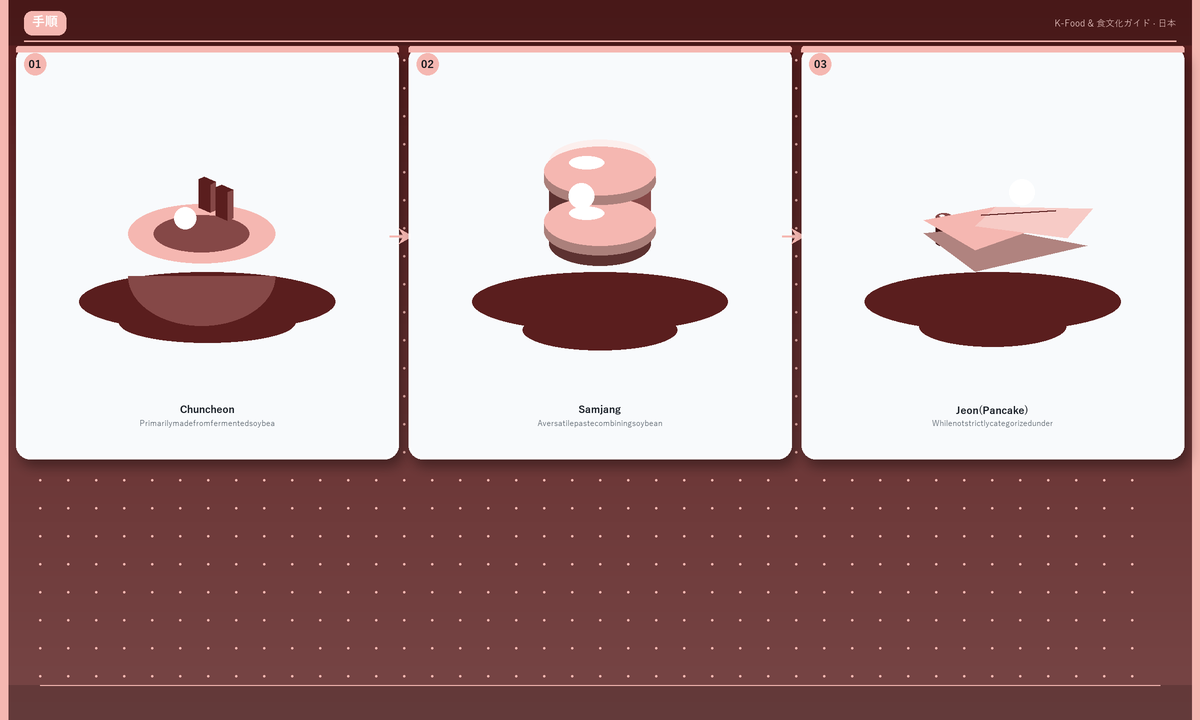
- Chuncheon: Primarily made from fermented soybean paste (doenjang), often seasoned with garlic, ginger, and sometimes chili flakes. It is thicker and more paste-like.
- Samjang: A versatile paste combining soybean paste (doenjang) with salted seafood (jeotgal), vegetables, and seasonings, typically used in stews and soups. It has a richer, more complex flavor profile.
- Jeon (Pancake): While not strictly categorized under these three, jeon often incorporates elements found in chuncheon and samjang, like soybean paste, but is a distinct dish prepared as a savory pancake.あわせて読む: 予算別ヨプトッポッキ 辛さレベル:コスパで失敗しない選び方 · 2026年のヨプトッポッキ 辛さ、何が変わった?
-
Usage and Preparation:
- Chuncheon: Commonly used in soups like doenjang-jjigae or as a dipping sauce. Its thick consistency makes it ideal for adding depth to broths.
- Samjang: Used extensively in dishes like bibimbap, samjang stew (samjang jjigae), and various side dishes (banchan). It blends well with meats and vegetables due to its robust flavor.
- Jeon: Prepared by mixing soybean paste with flour and sometimes other ingredients like scallions or seafood, then pan-fried until crispy on both sides.
Practical Tips
-
Balancing Spiciness:
- Chuncheon: Adjust spiciness by adding more or less chili flakes according to taste. Start with a small amount and increase gradually.
- Samjang: Since it already contains jeotgal (salted seafood) which adds natural umami and saltiness, add chili flakes cautiously to avoid overpowering the dish.
- Jeon: Incorporate chili flakes directly into the batter for a spicy kick, ensuring even distribution for consistent flavor throughout. -
Storage and Shelf Life:
- Chuncheon: Store in a cool, dry place and consume within 3-6 months for best quality. Refrigeration extends shelf life but check regularly for freshness.
- Samjang: Similar storage conditions apply, but due to its richer ingredients, it might last up to 6 months if properly sealed and refrigerated.
- Jeon: Fresh jeon is best consumed within a few days. Properly stored, it can last up to a week, but always check for freshness and odor before use.
Comparison and Recommendations
- Chuncheon vs. Samjang: While both are foundational in Korean cuisine, chuncheon excels in soups and broths due to its thicker consistency, whereas samjang shines in diverse cooking applications like stews and side dishes because of its versatile flavor profile.
- Jeon as an Addition: Incorporating elements from chuncheon and samjang into jeon can elevate its flavor complexity. Adding a small amount of soybean paste to the batter can create a unique, savory pancake experience.
要点まとめ
What are some essential tips for cooking jeon without burning it?
- Answer: Ensure your pan is preheated properly and use medium heat to cook jeon slowly on both sides until golden brown. Avoid overcrowding the pan and flipping too frequently to prevent burning. Adding a small amount of oil to the pan helps prevent sticking and ensures even cooking.
実践ポイント
What are the additional costs when trying traditional Korean dishes like jeon?
- Answer: Additional costs often include ingredients like seafood, special vegetables, or premium flours for batter. Prices vary widely depending on the restaurant and quality of ingredients used, typically ranging from ₩1,000 to ₩5,000 per serving.
選び方のコツ
How do I adjust spiciness without overpowering the dish?
- Answer: Start with a small amount of chili flakes and gradually increase according to taste. Test a small batch first to ensure the spiciness complements rather than overwhelms the dish.